
Bank credit offtake is expected to pick up following normalisation of economic activities aided by the government thrust on public expenditure in current fiscal year, a report said. According to the Care Edge report, the gross non-performing assets (GNPA) ratio hit a six-year low of 5.9 per cent in FY22 but remained above the pre-asset quality review of 2015-16. However, it said, India's NPA ratio is one of the highest among the comparable countries despite gradual decline.

Banks, the biggest component of the Indian equity market, are now trading at a big discount to the benchmark indicesThe BSE Bankex index, which tracks the share price of the 10 top listed banks, is trading at a trailing price to earnings (P/E) multiple of 15.3X, nearly a 40 per cent discount to the BSE Sensex current P/E of 24.37X. This is the biggest valuation gap between the two indices in at least 10 years. Similarly, the BSE Bankex price to book ratio (P/B) of 2.22X is 40 per cent lower than the current Sensex P/B ratio of 3.61X.

Morgan Stanley removed banking stocks from its model portfolio when it slashed its weighting on the sector by 500 basis points. Several foreign brokerages, such as UBS, JP Morgan, and Credit Suisse, of late, have also become less optimistic about banking stocks.

Chanda Kochhar, who was arrested for a cash-for-loan scam on Friday, was once a powerful banker and instrumental in making ICICI Bank the country's biggest private sector lender. Kochhar, a regular feature on Forbes top global honchos lists, was arrested by the Central Bureau of Investigation (CBI) along with her husband Deepak Kochhar in connection with alleged cheating and irregularities in loans sanctioned by ICICI Bank to Videocon Group companies. Kochhars were called to the agency headquarters and arrested after a brief questioning session. Her chapter at ICICI Bank ended abruptly in 2018 when the board of directors approved a request from Kochhar to seek early retirement following allegation of corruption and quid pro-quo while extending loans to the now bankrupt Videocon Industries.

'With NPA under control, we should be able to post better profits.'
HDFC Bank on Monday reported a consolidated net profit of Rs 16,811 crore for the September quarter, its maiden quarterly earnings announcement after merging parent HDFC with itself. On a standalone basis, the largest private sector lender reported a net profit of Rs 15,976 crore. In the year-ago period, the net profit of the merged entity would have been Rs 11,162 crore on a consolidated level while the same on a standalone basis would have been Rs 10,606 crore.

Benefitting from the economic rebound, banks are expected to report a healthy bottom-line and asset quality profile in the quarter ended March 2023 (Q4FY23). The net profit of listed commercial banks is projected to grow by an average 43.6 per cent year-on-year (YoY) in Q4FY23 amid better net interest margins (NIMs) and declining credit costs. This is based on a combined assessment of analyst estimates for 17 banks on Bloomberg database.

Sell the property if bought for investment purpose.

'I don't think we have ever seen such alignment of everything that we need in the banking sector.'

SBI Cards and Payment Services reported numbers that met Street expectations in the first quarter of the 2023-24 financial year (Q1FY24). The net profit came in at Rs 590 crore, while pre-provision operating profit grew 17 per cent year-on-year (YoY) (a little better than expectations). But provisions were hiked due to surprise stress from pre-Covid-19 period of 2018-19, and that dragged earnings.

If you have an active trading account or have consumer loans or thinking of taking out a loan, consider investing in NBFCs, says Devangshu Datta
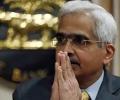
Reserve Bank Governor Shaktikanta Das will hold a meeting with CEOs of public sector banks on Wednesday to discuss issues concerning slow deposit growth and sustainability of high credit demand. As per the Reserve Bank of India (RBI) data, deposits rose by 9.6 per cent as compared to 10.2 per cent on a year-on-year basis, while credit offtake witnessed a jump of 17.9 per cent as against 6.5 per cent a year ago. According to an agenda circulated for the meeting, sources said, sustainability, including pricing and slow growth of deposits, would be discussed.

State-owned Punjab & Sind Bank is targeting salary accounts to boost the share of low-cost deposits. Swarup Saha, managing director and chief executive officer of the New Delhi-based lender, tells Manojit Saha that the bank may see gross non-performing assets (NPAs) fall below 8 per cent if there is resolution of the stressed assets.

It won't be easy for the banking sector to better its performance every quarter, predicts Tamal Bandyopadhyay.

After a record run in FY2022, when the brokerage industry is set to report over 30 per cent topline growth at around Rs 28,000 crore, the industry is set for a tepid growth next fiscal even though the outlook is stable, says a rating agency report. The market has been on a song since June 2020 when the first wave of the pandemic ebbed and since then it has had record run with the stock indices more than doubling since the Covid-19 mayhem in March 2020 and scaled new life-time highs since then. The market frenzy was also visible in the massive number of new investors coming to the equity market, as exemplified in the more than trebling of the demat accounts since April 2020.
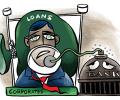
'We do not know when we will get to the business-as-usual mode.' 'Many borrowers may not be able to pay up.' 'The incidence of cheque bouncing has doubled or even trebled, some lenders say,' says Tamal Bandyopadhyay.

With the rise in interest rates, bond yields have been on the rise; this will dent banks' treasury profits. Also, many retail borrowers may find it difficult to service their loans when the loan rates rise, points out Tamal Bandyopadhyay.
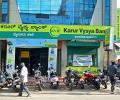
'We will test the waters, ferret out information through our business correspondents, and only then open a branch'
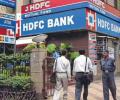
This will be the lender's first result after its merger with HDFC Ltd, effective from July 1, and will keep analysts glued to the management's earnings growth guidance for the merged financial behemoth.

An improvement in political relations, anchored in a restoration of peace and tranquillity at the border, could open up opportunities for expanded economic and commercial relations between them, suggests former foreign secretary Ambassador Shyam Saran.
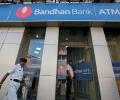
Bandhan Bank has declared disappointing results for the first quarter of the 2023-24 financial year (Q1FY24). While the market has been braced for known issues around microfinance exposures in West Bengal and Assam, there is higher stress in the portfolio. This means higher credit costs and poorer asset quality, leading to target downgrades by analysts.

Valued at $71.2 billion, the bank's market capitalisation is more than that of global banks like Barclays, JP Morgan Chase and Credit Suisse.

India's equity markets are on a roller-coaster ride, after delivering spectacular returns for two consecutive years - in 2020 and 2021. The benchmark National Stock Exchange's (NSE's) Nifty50 is down 1.5 per cent in the first nine months of the current calendar year 2022 (CY22) as foreign portfolio investors sold Indian stocks due to rising bond yields in the US and across global markets, including India. The sell-off in the Indian equity markets has, however, not been broad-based and largely limited to sectors facing earnings headwinds from rising interest rates, lower commodity and energy prices, and likely economic recession in advanced economies.

The government is somehow convinced that selective low-rate lending will stimulate demand and accelerate economic growth that plunged to a four-year low of 4.4 per cent in the first three months of 2013-14.

Capital expenditure by 54 large central public sector enterprises and five departmental arms, having a capex minimum target of Rs 100 crore, rose 93 per cent year-on-year (YoY) in the April-May period to Rs 1.39 trillion. The National Highways Authority of India (NHAI) and the Railways have started this financial year's capex cycle on a stronger note. In the first two months of FY24, the 54 CPSEs, along with the departmental arms, achieved 19 per cent of their combined budget target of Rs 7.33 trillion, Business Standard has learnt.

The correlation between withdrawal of deposits and the Covid death rate is stark, reveals Tamal Bandyopadhyay.
'When bankers are hounded by investigative agencies for credit decisions going wrong and defaulters are treated like outcasts, who will borrow money and who will lend?' asks Tamal Bandyopadhyay.

The government plans to bring down its stake to 26 per cent in these two banks, which are yet to be identified. This may not come in the way of getting investors for these banks, provided the government is willing to step back rather than run them the way it had been doing for over five decades since these banks were nationalised, points out Tamal Bandyopadhyay.
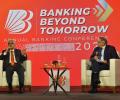
Bank of Baroda (BoB) has made prudential provision of Rs 500 crore for exposure to Go First, which has sought bankruptcy protection after the National Company Law Tribunal (NCLT) admitted its plea for voluntary insolvency. Sanjiv Chadha, managing director and chief executive officer of BoB, said the bank identifies issues in advance and makes provisions if required. The Mumbai-based public sector lender has an exposure of Rs 1,300 crore to the troubled airline.
The non-watchlist stress emanated from over five year-old loans in the iron and steel, infrastructure and construction sectors.

Retail investors seem to have dipped into their mutual fund savings to meet pre-festival spending. According to data released by the Association of Mutual Funds in India (Amfi), investors pulled out Rs 6,578 crore from their systematic investment plan (SIP) accounts in September, the highest in the last 11 months. The redemptions were on the higher side during the previous festive season as well.

The Centre should privatise all public sector banks (PSBs), except the State Bank of India (SBI). This is because private banks have emerged as a credible alternative to PSBs with substantial market share. Also, government ownership hinders the ability of the Reserve Bank of India (RBI) to regulate the sector, according to a report by the National Council of Applied Economic Research (NCAER).

Personal loans have about 80 per cent share in exposures restructured under regulatory package 2.0 by eight banks who have declared results for the second quarter. The remaining 20 per cent are loans to individuals used for business and credit to MSMEs. The total recast exposure of these banks under One Time Restructuring (OTR 2.0) was Rs 27,708 crore.

Gold jewellery demand in India is likely to decline in the second and third quarters of this fiscal due to hike in import duty, high volatility in prices and inflationary pressure, according to a report. While demand is likely to contract by 8 per cent year-on-year in the second quarter of FY23, the decline is expected to be higher at 15 per cent in the third quarter due to the exceptionally high base in the same period of FY22, Icra said in a report. According to the report, the exceptional third quarter performance in FY22 was due to the post-Covid reopening of the economy and the substantially high demand in the wedding and festive seasons.

Collectively, the pack of 12 has posted a 50 per cent rise in profits -- Rs 25,685 crore. On a quarter-on-quarter basis (that is, September over June), the rise is 68 per cent. Public sector banks have never had such a stellar performance, explains Tamal Bandyopadhyay.

'Starting an SIP now and continuing with it is likely to translate into high returns over the long term.'

'In 2022, active management, long-short strategies, multi-asset strategies, and asset allocation strategies need to be considered to meet long-term investment goals.'
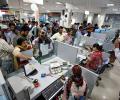
Amid slowdown blues, the government has unveiled a raft of measures over the past few months aimed at improving liquidity in the system, moderating interest rates as well as credit growth apart from addressing stress in the NBFC sector.

The Indian regulatory framework forced Citi to hibernate -- contrary to the claim that it never sleeps!

The coming years could be exciting for Bandhan Bank, IDBI Bank, IDFC First Bank, Federal Bank, and CSB Bank.
